

Tatuaje 7th
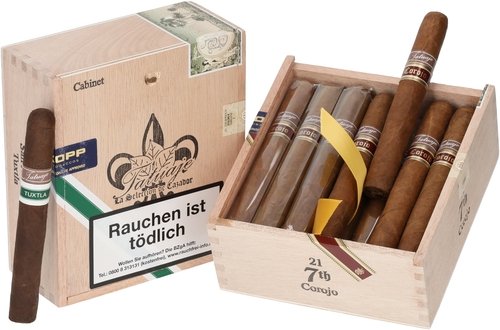
The Tatuaje 7th cigars got their name from the fact that this Corona Gorda format, measuring 5.625 x 46, was the seventh vitola introduced in the classic brown Tatuaje Seleccion de Cazador cigar line. Incidentally, the name of the classic series translates from Spanish as “Hunter’s Selection.” The classic Brown Label series features a H.-wrapper from Nicaragua. In the years that followed, variants with Connecticut Broadleaf and Sumatra wrappers were added, all of which used the same binder and filler blend. Eventually, the two featured here were released to the market.
Tatuaje 7th Cigars: Variety in the Corona Gorda Format
For aficionados in Germany, we initially received only two vitolas via the importer Kopp Tobaccos: the version with a Corojo wrapper and the one with a Mexican San Andrés wrapper. In total, there are now five variants available worldwide:
-
Tatuaje Seleccion de Cazador 7th with a H.-Ecuador wrapper
-
Tatuaje 7th Reserva with a Connecticut Broadleaf wrapper
-
Tatuaje 7th Capa Especial with a Sumatra wrapper from Ecuador
-
Tatuaje 7th Corojo with a Nicaraguan Corojo wrapper
-
Tatuaje 7th Tuxtla with a Mexican San Andrés wrapper
The Corojo features a Corojo wrapper grown by the García family in Nicaragua. The Tuxtla is rolled with a Mexican San Andrés wrapper. All five versions are manufactured by My Father Cigars S.A.; in Germany, only the two shown below are currently available. Both cigars offer the discerning aficionado a dense spiciness, notes of cocoa, earth, and dark coffee, along with a pronounced but well-integrated strength. A strong recommendation for connoisseurs who appreciate the “crisp” signature of Tatuaje cigars and are looking for a more intense take on this classic.
My Father Cigars S.A.: The Manufacturer Behind the Tatuaje Series
A small fun fact: The Tuxtla variant originated from Pete Johnson’s long-standing interest in Mexican tobacco, which began back in 2012 with the Mexican Experiment. The sought-after San Andrés tobaccos, known for their dark color, natural sweetness, and earthy depth, are grown in the Tuxtla region. I’ve just lit up a test stick of the Nicaraguan version, the one with the Nicaraguan Corojo wrapper — let’s see if the foundation is solid… :-) The first third is surprisingly mild and barely peppery. As the smoke progresses, earthy and hefty notes take over, without becoming scratchy or harsh. For me, a very pleasant surprise — and at a very fair price for a premium cigar from Nicaragua.
More Tatuaje items





Manufacturing types
| Logo | Abkürzung | Beschreibung |
|---|---|---|
 |
MM | Machine Made (vollkommen von Maschinen hergestellte Zigarren, daher das Fabriksymbol) |
 |
HAM | Hecho a Mano, d.h. dies ist eine Mischform – die Einlage mit der Maschine, das Deckblatt von Hand überrollt |
 |
TAF | Totalmente a Mano, d.h. komplett von Hand hergestellt ABER mit gerissener Einlage (dies ist die offizielle Bezeichnung der Kubaner dafür) |
 |
TAM | Totalmente a Mano, komplett von Hand hergestellt mit ganzen Blättern |


