

De Olifant: Bestseller
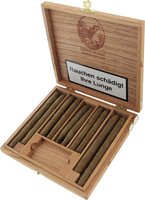


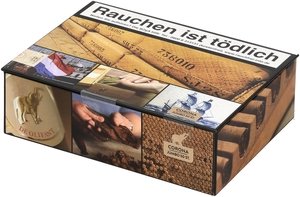

De Olifant: All items


De Olifant: Short- and Medium-Fillers from Kampen
The cigarillos from "The Elephant"—the German translation of "De Olifant"—have been around since the early 19th century. The name originates from the trading ship De Witte Olifant of the Dutch East India Company, which was the world's largest and most powerful trading company between 1602 and 1799. Like many other Dutch trading ships of that era, De Witte Olifant regularly transported tobacco from the East Indian colonies of Java and Sumatra to the Netherlands, where it was processed into smoking products. The De Olifant tobacco factory continues this centuries-old tradition, built on the principle of using only pure, high-quality tobaccos. Each year, 4.4 million cigarillos, as well as short-fillers and medium-filler cigars leave the Kampen factory—a relatively small number compared to other producers. Yet, each cigar, available in eight main models and various limited editions, follows the motto: "Better in moderation, but with the highest enjoyment."
De Olifant’s German Roots
The bands on De Olifant cigars display two years related to the company's founding. The first, 1826, marks the establishment of the first tobacco factory in the small Dutch town of Kampen, located on the IJsselmeer. It was Bremen merchant Johann Lehmkuhl who recognized Kampen’s strategic advantages as a Hanseatic city and laid the foundation for what would later become the cigar capital of the Netherlands—similar to the cigar tradition of Bünde in Westphalia. In 1832, a cigar factory was established by the Dutch entrepreneur Meulenkamp, which later became De Olifant.
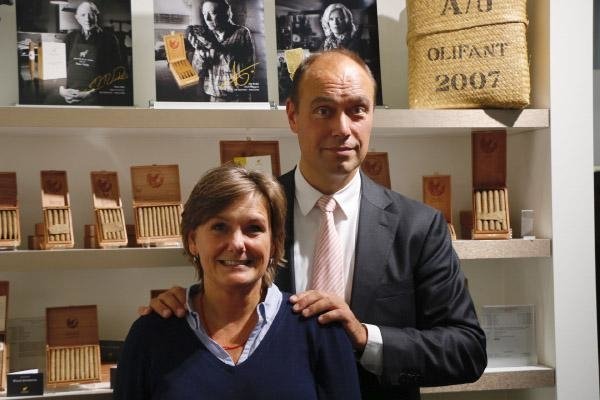
Around 1900, Kampen had become the Dutch tobacco hub. Over 120 manufacturers on Vorstraat, the street where all the factories were located, processed thousands of bales of tobacco from the Indonesian colonies into cigars, pipes, and chewing tobacco. The city was so influential in trade that it was nearly chosen as the capital. However, little remains of that grandeur and cigar tradition today. De Olifant is the last remaining manufacturer in Kampen and has been run since 1993 by Thomas Klaphake and his wife Maaike van der Sluis, whose family has owned the company for four generations.
De Olifant Cigars and Cigarillos
At De Olifant, it has always been a core belief that an outstanding cigar requires a special wrapper. For this reason, the brand exclusively uses the rare Sumatra Sand Leaf for the filler blend and binder, renowned for its unparalleled taste and aroma. Highly valued among aficionados, this wrapper is cultivated in very small quantities and is often referred to by connoisseurs as "white-burning gold." Rightfully so: one kilogram of this wrapper costs more than a kilogram of silver. De Olifant is one of the few producers still using this exquisite leaf.
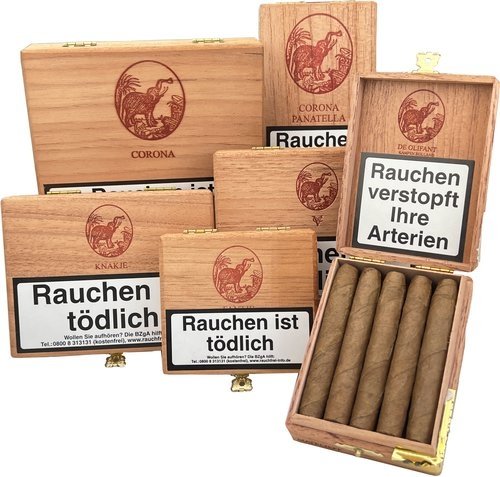
According to Thomas Klaphake, the goal should always be to maintain the taste and quality of cigarillos at the highest level, even as smoking moments become shorter. The cigars in the Classic line are all masterpieces. From the small cigarillo, such as the Fantje Imperial, to the larger Corona Panatela Imperial, there is a perfect format for every aficionado, for any time of day and any smoking occasion.


