


Pipe Filters
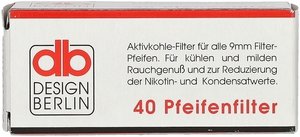
In Germany, they are almost standard, but not necessarily abroad: pipe filters. They are usually available in 9 mm, but also in 6 or 3 mm; they use activated charcoal, meerschaum, balsa wood, crystals or granules – especially for beginners, the range available can seem almost overwhelming. Let’s shed some light on the subject!
Smoking a Pipe With or Without a Filter?
Why smoke a pipe with a filter in the first place? Some pipe enthusiasts categorically reject filters because they prefer the pure smoking experience. This view is particularly common abroad, where filters are less widely used. Filters are said to alter the flavor or affect the draw resistance. Ultimately, using a filter is almost a philosophical question.
However, there are also a number of reasons in favor of using a filter. First, of course, there is the health aspect: a filter traps tar and other harmful substances and also reduces the nicotine content of the smoke. At the same time, it absorbs condensate, making the smoke drier, cooler and generally milder, which many pipe enthusiasts appreciate.
Pipe Filters in 9 mm and Other Sizes
There are historical reasons why filters are so widespread in Germany in particular. The pipe filter is a German invention, introduced to the market in 1934 by the Nuremberg-based company Vauen. The activated charcoal Dr. Perl Filter, continuously improved over the years, is still available today. The 9 mm size also originated with Vauen, and most pipe manufacturers have since adapted their filter bores to this size, making numerous pipes compatible with it. Other companies now also produce 9 mm activated charcoal filters, including White Elephant and Big Ben. Compared with Vauen, Big Ben filters in particular offer lower draw resistance.
Pipes with a 6 mm filter bore have a smaller market share, but suitable filters are also available from White Elephant and Gizeh. Vauen also offers 6 mm filters, although these are compatible exclusively with Vauen Six pipes. Filters in 8, 4 and 3 mm sizes are also available, such as the paper filters from Denicotea, which are suitable for most pipes without a filter bore.
Activated Charcoal, Meerschaum and Wood Filters
In addition to different sizes, pipe filters are also available in a variety of materials. The activated charcoal filters mentioned above are very effective at absorbing harmful substances, but less so at absorbing moisture. This is where meerschaum filters have a clear advantage. They are made from sepiolite, the same mineral used to make meerschaum pipes. It is porous and absorbs condensate very effectively, while allowing more nicotine and tar to pass through.

Balsa wood, as offered by Savinelli, for example, absorbs moisture as well as a large proportion of harmful substances without affecting the flavor. Brigham also offers filters made from maple wood, which can be washed and reused several times. Special filters are available from Tsuge; they are designed exclusively for Tsuge system pipes.
As an alternative to filters inserted into the shank, some pipe smokers also use granules placed in the tobacco chamber beneath the tobacco. These have the advantage of also trapping harmful substances while not adversely affecting the draw.
How to Insert and Replace Pipe Filters Correctly
There are a few things to keep in mind when smoking with a filter. Filters need to be inserted correctly into the smoke channel. Vauen products, for example, have a heat-resistant ceramic cap on the side facing the pipe bowl, while the other end is made of plastic because it only comes into contact with the cooler smoke near the mouthpiece.
We have already mentioned the increased draw resistance. If you are used to smoking without a filter, this is probably where you will notice the biggest difference. You should therefore avoid drawing too strongly on the pipe to reduce the risk of burnout. Activated charcoal filters in particular should be replaced after every smoke. By then, they are saturated and can no longer absorb effectively.
Choosing the Right Pipe Filter
Whether you smoke with or without a filter is ultimately a very individual decision. It depends on your personal preferences and, of course, on your pipe. We recommend trying different filters to find the one you prefer.


