


Dutch Cigarillos – Cigarillos from the Netherlands
Niederlande: Bestseller


Niederlande: All items


Cigarillos from the Netherlands – Shortfiller Tradition and European Craftsmanship
Anyone writing about cigarillos from the Netherlands quickly arrives at a distinctly individual style: less pathos, more everyday suitability; less grand format, more precise blending. Dutch cigar culture has historically been closely linked to the shortfiller. Cigars have been produced in the Netherlands since the early 18th century; classic shortfillers often worked with Java and Sumatra tobaccos, and places such as Kampen were important centers of this production in the 19th century.
To this day, the blend concept remains characteristic: in a shortfiller, the filler consists of fine tobacco pieces, sometimes from many different provenances, rather than a few whole leaves as in a Longfiller.
Typical Style: Everyday Suitability Instead of Staging
For this very reason, cigarillos from the Netherlands often appear unmistakably European. They generally do not aim to recreate the drama of a large evening cigar, but instead deliver a compact, reliable smoking moment. Historically influential houses include Hajenius in Amsterdam, founded in 1826 and still a mainstay of Dutch cigar culture, as well as De Olifant, which looks back on a tradition in Kampen dating to 1832.
Flavor and Blend Philosophy of Dutch Cigarillos
In terms of flavor, cigarillos from the Netherlands often stand for mild to medium intensity, clean craftsmanship, an uncomplicated draw, and a profile defined more by balance than by raw strength. Sumatra, Java, Brasil, or Ecuador regularly appear as wrapper or blend descriptors; this points less to fashionable origin labels than to a long-standing Dutch art of blending.
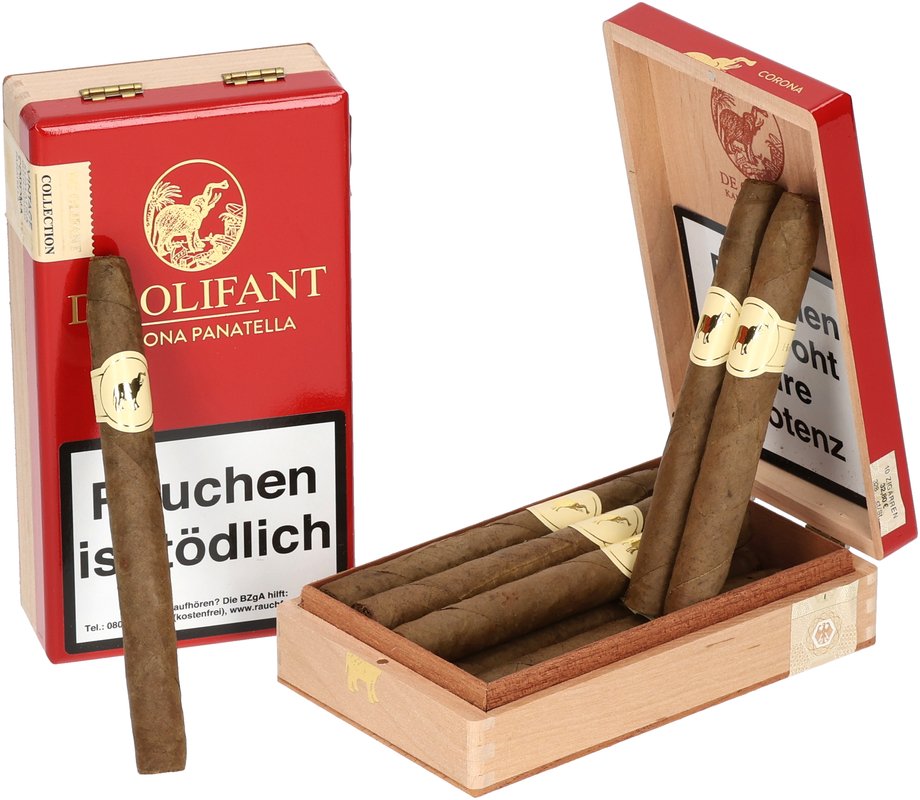
It is particularly typical that traditional Dutch types are defined by small formats, approachable aromas, and clear everyday suitability. The Dutch cigarillo is rarely a loud product. It is more of a well-practiced companion—built for routine, not for theater.
Well-Known Brands and Positioning within the Range
Biddies stand for flavored shortfillers made from 100% tobacco. Meharis are among the best-known Dutch shortfillers and are produced in the Netherlands, while Panter covers the broader, value-oriented everyday segment and, unlike Meharis and Biddies, is not consistently made from 100% tobacco.
De Olifant embodies the historic, craftsmanship-driven side of Dutch cigar culture from Kampen, and Hajenius in turn represents the classic Dutch type with tradition-conscious blends, for example with a Sumatra wrapper and an Indonesian-influenced filler. Granger occupies the more modern filter cigarillo segment and stands out, among other things, for a biodegradable paper filter, while Wilhelm II is clearly perceived in today’s market as a brand of Dutch tradition.
Why Cigarillos from the Netherlands Form Their Own Category
All in all, cigarillos from the Netherlands are above all one thing: a distinct category of their own. They thrive less on exoticism than on signature style. Those who appreciate them are often not looking for a grand performance, but for reliability, recognizability, and an aroma that does not impose itself.
This is precisely where their strength lies—and precisely why Dutch small-format brands continue to hold a firm place in the range of European smoking culture to this day.


