

The Stumpen - A Smaller Form of Cigar

You don’t have to be a cigar aficionado to be familiar with the term "Stumpen." For non-smokers, Stumpen and cigars are practically synonymous, with "Stumpen" being more of a colloquial term. It conjures images of a nearly burned-down cigar casually perched in the corner of someone’s mouth—be it an unshaven villain in a Western, a cold-blooded gangster in a crime film, or Meister Röhrich from the “Werner” comics, if the image needs a lighter touch. However, there are notable differences. A Stumpen is not simply a "cigar stub" but a distinct product with its own history.
A Swiss Invention

Stumpen are short, typically thick cigars that are machine-made and have their origins in Switzerland. They were first produced around 1850 at the Ormond cigar factory in Switzerland. Louis Ormond founded the company as "Manufacture de Cigars Ormond et cie." After Louis Rinsoz joined, the company was renamed "Rinsoz & Ormond." While the company no longer exists, some brands like Meccarillos, Ormond, and Fivaz are still marketed by the tobacco conglomerate "Burger Söhne," which also owns brands like Dannemann and Al Capone.
During their heyday in the second half of the 19th century, Stumpen were mainly manufactured in the Swiss region of Aargau, which quickly earned the nickname "Stumpenland". As cigarettes began to dominate the tobacco market, an advertising campaign was launched with the slogan "Be a man, smoke Stumpen and cigars," a phrase still familiar today.
Short, Thick, and Bold
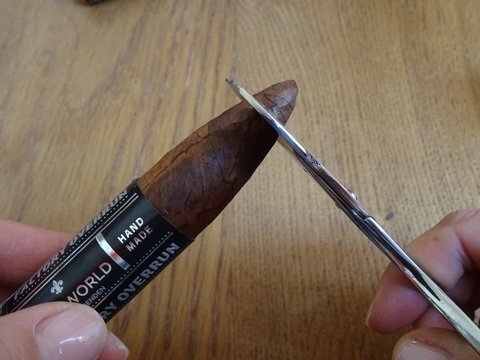
The short, thick Stumpen are made from dark and robust tobaccos. They feature earthy aromas and can be smoked more quickly than traditional cigars. Initially, they were produced in extended lengths with a long wrapper leaf and then cut to the desired size. As a result, Stumpen always have a uniform, albeit short, shape and are blunt at both ends. The manufacturing process, not the length, inspired the name "Stumpen."
Colloquially, however, the term has persisted as a general reference to other short cigar formats: Short Robustos or Petit Coronas, for instance, are often included, even though their production processes differ significantly. A Villa Zamorano Classic Intenso (Short Robusto) , for example, may be short and thick but is hand-rolled and not cut at both ends.


Further topics


Discover & enjoy
In our shop you will find: