

Cigar Brands – History and Development
The most prominent—or rather, the best-known—cigar brands originated in Cuba. However, with many other countries producing cigars, a wide array of brands and formats has developed. Each brand typically offers multiple formats (Vitola de Galera), each with unique characteristics. These qualities are often defined by different tobacco blends that bring out distinct flavor profiles. In addition to traditional brands from well-known growing regions, there are also a few exotic names.
The origins of tobacco and cigars are not entirely clear, and there are several theories on the topic. However, the history of the major cigar brands as we know them today can be traced. Among the iconic names that any aficionado will recognize today are cigars from Partagas Cigars , Montecristo Cigars , and, of course, Cohiba Cigars .
The Origins of Cigar Brands
In the early 19th century, Cuba was home to numerous small tobacco workshops. When Don Jaime Partagas founded his company in 1827, he advanced the concept of branded cigars. He ran his company for 20 years and, together with H. Upmann, registered his brand in 1844 as a trademark. Following Partagas, several brands emerged in the years to come that aficionados still know and appreciate: Por Larranaga Cigars in 1830, Punch Cigars by Manuel Lopez in 1840, and H. Upmann Cigars in 1844. The brands Ramon Allones Cigars (1845), El Rey del Mundo Cigars and Sancho Panza Cigars (1848), Romeo y Julieta Cigars (1850), and Hoyo de Monterrey Cigars (1851) were also established.
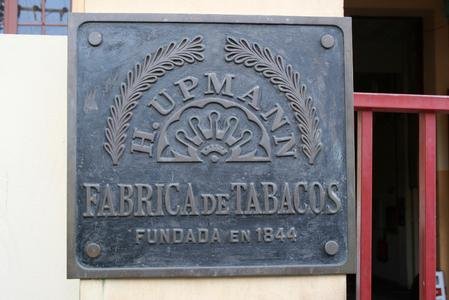
The growth of these brands was so extensive that, in 1840, cigars were named after Havana, Cuba’s capital—thus creating the now-familiar name for a Cuban cigar: the Habano.
The Montecristo brand was established much later, in 1935, quickly becoming a leader in Havana cigars following the acquisition of H. Upmann and Por Larranaga.
Cohiba, on the other hand, was created in 1962 specifically for Fidel Castro, produced in the now-famous “El Laguito” factory. Castro personally ordered and supervised the production of this puro. Initially, the brand was not available for public sale but was reserved as a gift for friends of the revolution and foreign dignitaries. Since 1982, Cohiba has been available on the open market and remains the premier product of Cuba's cigar industry.
When Cuba Tried to Abolish Brands
After the revolution, Fidel Castro made the surprising decision to end the era of brands. The celebrated image of Havana was to be toned down, leading to the elimination of names, boxes, labels, and bands for many brands. Cuba had 960 types of cigars, which were now reduced to just four, all produced under the name “Siboney.” A state-owned company named “Cubatabaco” was established to manage production.
This led to a collapse in exports, and Cuban cigar production had to be revived. Davidoff in Geneva was consulted, and they recommended reintroducing the brands and traditional production methods. Soon after, Cubatabaco offered more than 300 varieties, each carrying the labels of famous brands once again.
Same Brand Name – Different Countries
As a result of Castro's revolution, many renowned cigar makers fled Cuba. Families like Palico, Cifuentes, and Menendez left the island and restarted their production in other countries, using the same brand names as in Cuba.
Thus, cigars named Romeo y Julieta, H. Upmann, and Partagas are now also produced in the Dominican Republic, La Gloria Cubana Cigars in Miami, Punch and Hoyo de Monterrey in Honduras, and Sancho Panza in Mexico.
New brands, such as Don Marcos, Don Diego Classic , and Don Miguel, also emerged. While these share Cuban names, their flavors are different from their Cuban counterparts.
Other Famous Brands from Around the World
Many exiled Cubans settled in Nicaragua, which offered soil and climate conditions similar to those in Cuba. After political unrest in the 1980s, Nicaragua has rapidly grown to become a major player among cigar-producing countries in the 21st century.
Cigars from Nicaragua
In Nicaragua, classic brands include Carlos Torano, Oliva, and Joya de Nicaragua, which are highly regarded in the U.S. market. Other popular brands include Perdomo, Don Pepin Garcia, and newcomer Cain.



Cigars from the Dominican Republic
For the Dominican Republic, brands like Ashton, Arturo Fuente, Don Diego, Santa Damiana, Griffin’s, and Leon Jimenes are well-known.
The U.S. trade embargo on Cuban cigars has made Dominican cigars highly popular there. This surge in popularity was influenced by Davidoff, who relocated production from Cuba in 1988. Companies like Dunhill, Arturo Fuente, and the global brand Macanudo are now synonymous with quality Dominican cigars.



Cigars from Honduras
Like Nicaragua, Honduras also benefited from Cuban cigar makers who fled Castro’s regime. Camacho is a prominent brand, with the Eiroa family being the first to cultivate the Cuban Criollo and Corojo tobaccos outside Cuba, producing distinct, characterful cigars from Honduras.
Another well-known brand is Flor de Selva. Founded by Maria-Pia Selva in 1995, this brand is produced by Nestor Plasencia, who owns a vast tobacco empire in Honduras. Selva personally oversees every tobacco blend, with Torcedores working exclusively for her brand.
Cigars from Costa Rica
Unlike Honduras and Nicaragua, Costa Rica grows and processes much less tobacco, partly due to the country’s significantly higher wages. The cigar brands Brun del Re, Chieftain’s, Flor Real, and Vegas Santiago are highly valued by a small circle of true connoisseurs.

Cigars from the Philippines
The Philippines are relatively unknown in the cigar world, yet tobacco cultivation here dates back to the 16th century, introduced by Dutch and Spanish traders.
For a time, cigars from the Philippines competed with Cuban Habanos but receded in prominence in the 20th century. Known for their floral, spicy, and generally mild aromas, the Flor de la Isabela was once the most famous cigar from the region. Today, Flor de Filipinas is the leading brand.
Cigars from Germany
Germany has long produced “European cigars,” which are similar in production and tobacco varieties to those made in the Netherlands. Both countries use Brazilian and Sumatran tobaccos, though Brazil has a larger share in Germany. August Schuster still offers Brazil Trüllerie cigars today.
The cigar capital of Germany is Bünde in Westphalia, home to the current cigar museum. Today, producers Arnold Andre and August Schuster are based here, along with the well-known Dannemann brand in Lübbecke, North Rhine-Westphalia.
Cigars from the GDR
Even the GDR (East Germany) produced a cigar, humor ously named “Sprachlos” (“Speechless”). It was manufactured in the state-owned factories in Treffurt and Dingelstädt, sold in a cardboard box, and priced at a fixed 2.40 marks for 20 pieces.
After the GDR era, Dannemann acquired the Treffurt factory and still sells “Sprachlos” as a line of cigarillos today.
Cigars from the Netherlands
Sumatra cigars are to Holland what Brazilian cigars are to Germany. During the colonial period, the Dutch shipped tobacco from Sumatra and Java to the Netherlands for processing. The most famous and still-operational company in Kampen is De Olifant.
Following Dutch tradition, short filler cigars are produced. These consist of a short-cut filler blend, a binder, and a wrapper. The filler includes Java, Sumatra, Brazilian, and Cuban tobaccos. De Olifant cigars are unique worldwide as each format has its specific blend.
Further topics


Discover & enjoy
In our shop you will find: